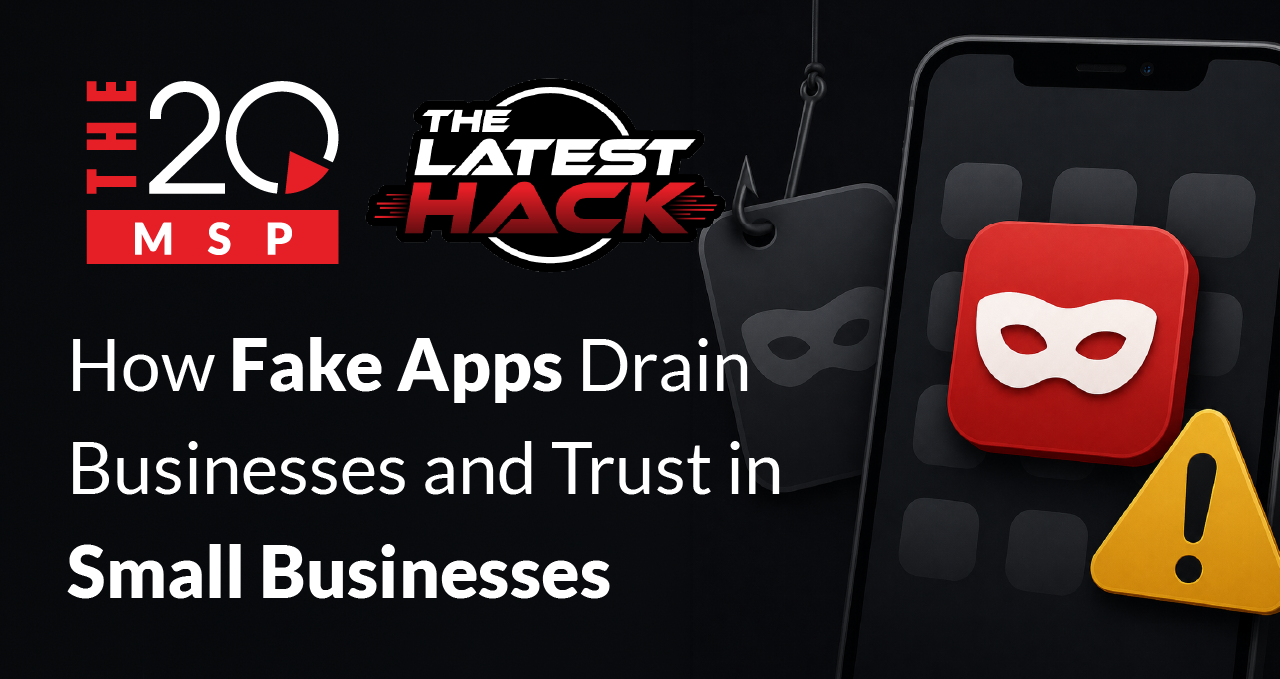
How Fake Apps Drain Budgets and Trust in Small Businesses
Not everything on the App Store should be trusted.
While Apple works diligently to keep its store safe, the truth is that thousands of fake apps still make their way onto the platform. And with the rise of generative AI, that number is increasing.
In this post, we’ll break down why fake apps are on the rise, look at a recent example, and explain what small businesses can do to protect themselves.
A Worrying Increase of Fake Apps
Apple’s App Store has been rock-solid since its launch in 2008, and with good reason. Apple has strict quality control, reviewing tens of thousands of submissions every day, removing any that violate its policies as quickly as possible.
That said, bad apps can still slip past Apple’s keen eyes. In 2025 alone, Apple removed more than 37,000 apps from the App Store for fraudulent activity. While Apple does a good job at taking these apps down before long, some users inevitably download them before they’re removed.
This issue is also getting worse with the rise of AI. According to DV Fraud Lab, 2025 saw a 300% increase in fraudulent iOS apps and 600% increase on Android, with AI-generated apps being a major cause.
Part of this is because attackers are now using AI to produce more apps than ever before, along with fake reviews and copied branding that make them look real.
As these fraudulent apps increase, so does their impact.
How Fake Apps Cause Damage
Many fake apps are designed to install malicious software, steal personal data, login information, or financial information. For example, an employee might try to install Slack, but instead downloads “Sllack” (notice the extra “L”). When they log in with their work information, they unknowingly provide an attacker a direct route to your company’s systems, creating a potential data breach.
But that’s not the only way malicious apps cause damage.
Fake apps can also:
- Drain advertising budgets by generating fake clicks.
- Inflate app popularity with fake engagement.
- Damage trust in legitimate developers by impersonating their products.
For small businesses, this creates a two-pronged risk: financial and reputational.
It’s estimated that the digital marketing industry loses around $35 billion a year to click fraud and ad fraud, with fake apps playing a growing role.
Without proper safeguards and guidelines, an employee could accidentally install one of these bad apps, exposing sensitive business information after a few short button presses. This is called shadow IT (when something is installed on a company device without IT’s knowledge), and it is a serious issue for small businesses.
And if your business develops or relies on its own applications, these fake apps create even more challenges: protecting both customer safety and brand reputation. A convincing impersonation could trick customers into sharing sensitive information and damage trust in your legitimate business.
Fake Apps in the Real World – Crypto Wallet Scam
Let’s look at a recent example of bad apps in action. Kaspersky Threat Research identified 26 fake Apps on the Apple App Store. These apps, collectively referred to as FakeWallet, were designed to mimic popular crypto wallets such as:
- Metamask
- Ledger
- Trust Wallet
- Coinbase
- TokenPocket
- imToken
- Bitpie
Once installed, these applications tricked users into sharing recovery phrases or private keys, granting the attacker full access to their crypto wallets and enabling them to steal funds directly.
Some of these apps used slight spelling variations (for example, “LeddgerNew”) to appear legitimate at first glance, while other apps were disguised as harmless tools or games. Once opened, they redirected users to fake installation pages that led to the same outcome: stolen credentials or compromised wallets.
This goes to show just how complex modern app scams have become. From convincing branding to fake login pages, these apps are becoming harder to detect.
How to Spot Fake Apps
Fake apps aren’t easy to spot, though there are signs that can give them away.
Here’s what to watch out for next time you’re browsing the App Store:
- Typos and inconsistencies: Look closely at the app name, logo, and description. Small spelling mistakes (“Sllack” instead of Slack or “M1crosoft” instead of Microsoft) or altered logos can reveal a fake app.
- Unexpected pop-ups: Be cautious if an app immediately opens a browser or asks you to follow external links.
- Unknown or suspicious publishers: Check the developer’s profile. If they have little history, unrelated apps, or a suspiciously large number of created apps, consider it a red flag.
- Strange reviews: Check the reviews for strange behavior. That could be a flood of 5-star reviews or reviews that either don’t match the product, are riddled with typos, or simply don’t make sense.
How to Secure Yourself Against Bad Apps
One of the most effective ways to reduce the risk of bad apps is to control what can be installed on company devices. By creating an approved list of apps, anything not on that list is blocked.
Beyond that, tools like multi-factor authentication (MFA) drastically reduce the chance a single mistake can spiral into a full-blown security incident, and ongoing cyber awareness training ensures your employees know what to look out for.
Security is not a one-and-done. It takes a consistent combination of tools, policies, and awareness to keep the hackers out.
Protect Your Business with The 20 MSP
If that sounds like a lot to manage, it’s because it is.
That’s where we come in.
For one flat-rate monthly fee, you get access to an entire team of security experts. Whether you need help implementing application control to keep the bad apps out, configuring MFA for extra protection, or offering your employees ongoing awareness training, The 20 MSP will make sure your bases are covered.
That’s protection, guidance, and support without any overhead or hiring headaches – and no surprise bills.
If that sounds good to you, we’re here to help.
Want more tips like this?
Subscribe using the form on the right and get our latest insights delivered straight to your inbox.
About The 20 MSP
As a leading provider of managed IT services, The 20 MSP serves thousands of businesses nationwide, providing each one with white-glove service, secure and streamlined IT infrastructure, and 24/7/365 support. We believe in building lasting relationships with clients founded on trust, communication, and the delivery of high-value services for a fair and predictable price. Our clients’ success is our success, and we are committed to helping each and every organization we serve leverage technology to secure a competitive advantage and achieve new growth.